Maintenance
Cleaning and care of oiled parquet floors
General information
Treating parquet floors with an oil finish creates an impregnating and film-forming surface, which is designed to protect the parquet floor from dirt as well as wear and tear. The effectiveness of the oil coating is subject to amount of use as well as wear and tear. Routine cleaning and maintenance of the surface helps protect the oil coating by reducing the effects of wear and retaining or improving the appearance of the used parquet surfaces. These instructions apply to oiled parquet floors. The cleaning and care products referred to in the following were specially developed for Colourrepublic oiled surfaces and therefore can be used without difficulty.
Initial maintenance
We recommend that you do the first maintenance right after pre-finished parquet is laid. This protects the untreated tongue and groove areas from the penetration of dirt and moisture. We recommend that you use our matt Oil for the initial maintenance. See chapter 13.7 for a precise description of how to use the correct care and maintenance products.
Maintenance cleaning
A soft broom, dust mop or vacuum cleaner is sufficient for general cleaning and the removal of loose dirt. Stubborn dirt can most easily be washed away with a damp cleaning cloth. For larger areas, a wet-cleaning machine or single-desk machine with a fine cleaning fluid, such as Colourrepublic care Parquet Cleaner, to the wash water. Stubborn spots can best be removed with Colourepublic Intensive Cleaner.
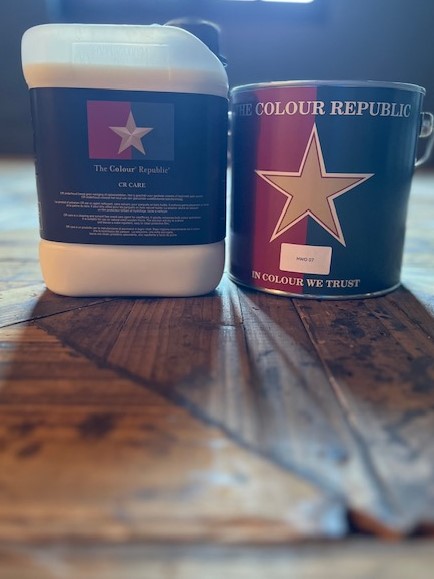
Colourrepublic Care
Particularly suited for the on-going maintenance of lightly used parquet flooring. Colourrepublic Care is a concentrated care product formulated on the basis of natural oil that is added to the wash water.
Directions: Remove loose dust and dirt from the parquet surface. For stubborn dirt, clean the floor beforehand with Colourrepublic Parquet Cleaner. Add 1% Cleaner (50ml per 5l of water) and mix well. Mop the floor with a wet mop. You should only use microfiber cloths suitable for parquet. After drying for about one hour, an even, matt protective film will appear. The frequency of wash cleaning depends on how intensively and hard the surface is used.
Oil maintenance for light use
Apply Colourrepublic Care in a thin layer completely over the parquet floor using a flat or a wash mop or with a sprayer. Make sure the layer is evenly distributed and allow to dry. Use about 15 to 20 g/m2. Do not rub dry with cloths. Allow the freshly oiled parquet surface to dry thoroughly for 3 to 4 hours.
Oil maintenance for heavy use and dirt
First remove most of the dirt with a vacuum cleaner or dust mop. Then spread Colourrepublic Intensive cleaner evenly over the parquet surface, allow it to work in for a short time, and, if possible, loosen the layer of dirt by using a suitable single-disk machine. Wipe the cleaned surface one again with clean water and allow to dry. Then apply a thin layer of Colourrepublic Oil. Use about 15 to 20 g/m2. Do not rub the oil dry with cloths! The freshly oiled parquet
Basic cleaning
If the floors becomes extremely dirty or if layers of the cleaning agent have built up over time, a thorough basic clean can be carried out with the Intensive Cleaner from Colourrepublic. Application: Spray on the intensive cleaner, spread evenly and thinly, leave it towork briefly. Loosen the layer of dirt by using a single-disk machine and suitable pad or an appropriate brush scrubber. Next wipe up the dirt with an Intensive Cleaner thoroughly once again with clean water and allow to dry. For basic thorough cleaning, we recommend that you work in twos. The surface can be treated again depending on its level of use and soiling.
Please note: It is possible to clean oiled parquet floors quickly with a modern scrubbing machine today. However, because of the wide range of manufactures and machines, it is absolutely necessary that you inform yourself about the handling and use of the equipment you plan to use from the supplier.
Use of other care products on Colour republic parquet
There is a wide variety of oil, solvent-containing waxes, low-solvent wax pastes, water-based oil-wax emulsion, or soap products for oiled parquet flooring maintenance available on the market today. Because of this product diversity, we cannot assume any guarantee for how well they will work. Therefore, we only recommend the products named here for the care and maintenance of oiled floor surfaces from Colour republic factory. The use of any other products is at your risk and responsibility.
General information
- The use of an effective “dirt barrier” (grating, coarse doormat and textile mat) at the entrance helps keep sand and dirt from getting of your parquet floor.
- Place soft felt sliders on the legs of your furniture, chairs and tables to prevent scratches and gouging.
- Adhesive tape used to affix floor covering material may not be stuck directly to the parquet surface. Doing so will damage the surface treatment.
- For areas of heavy use, such as through office chair rollers, it is recommended that you use a standard protective matt out of transparent plastic (for example, PVC).
- Remove water and other liquids from the floor as soon as possible.
- Use soft chair rollers and clean these regularly.
- It is essential that you maintain a room temperature of 20 or 22°C and relative humidity of 40 or 50% in order to retain the value of the parquet floor and for the wellbeing of those, who live with it.
- For those types of wood, which expand and contract considerably (such as beech), larger gaps can appear in winter. By humidifying the air and maintaining a healthy room environment, you can reduce the amount of this contraction.
- The floor surface temperature may not exceed 27°C when laying parquet over radiant floor heating!
- Please also read our technical memorandum on “Parquet and Radiant Floor Heating” for more on this.
- Our technical advice service is available for any other questions or uncertainties.
Safety instructions
Oil-soaked rags and cloths, etc. can combust spontaneously because of the natural characteristics of dried vegetable oil. You should therefore store oil-soaked rags and cloths in tightly closed metal containers or in the open, and spread them out on a non-flammable surface to dry. After they are completely dried out, you can dispose of them with normal household waste.